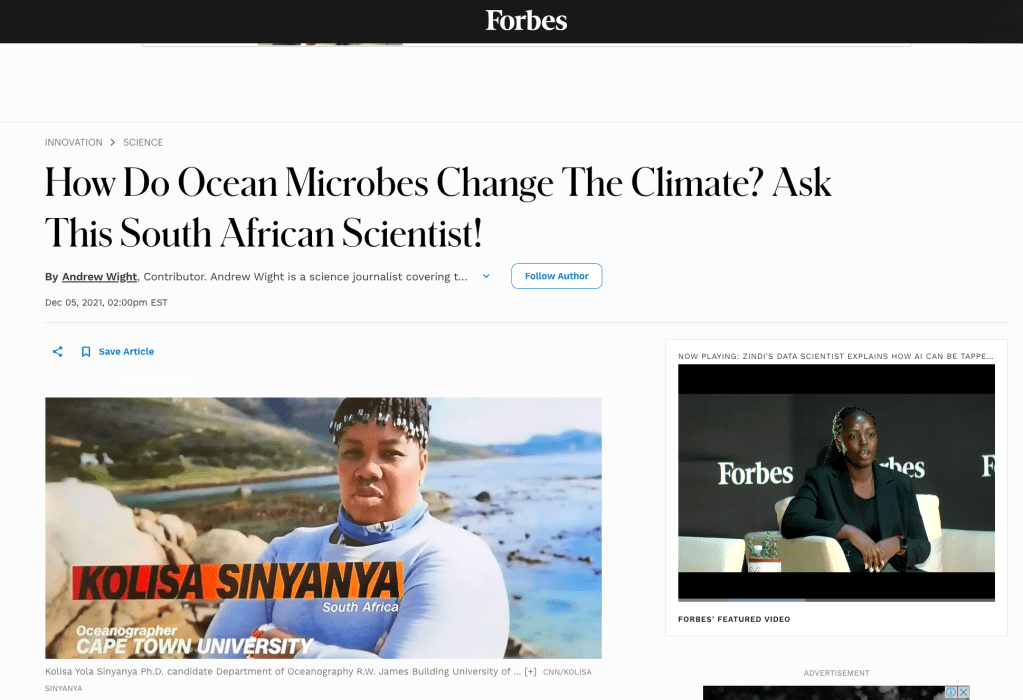
Thanks to Andrew Wight, a science journalist covering the Global South at Forbes! Forbes Science documented my PhD work on how microscopic powerhouses known as phytoplankton contribute to global climate systems in ways you might not expect.
Microscopic Life, Massive Impact: How Ocean Microbes Manage Carbon
When most people think about tackling climate change, they picture forests or renewable energy sources, but the ocean is just as crucial. Within its depths and on its surface, tiny microbes called phytoplankton work hard every day, using sunlight and carbon dioxide (CO₂) through photosynthesis to produce oxygen and organic material. This natural process is part of what’s called the “biological pump.” Phytoplankton, through this carbon-fixation process, are pulling CO₂ out of the atmosphere and helping store it in the deep ocean—an important process for reducing greenhouse gases and making planet Earth habitable.
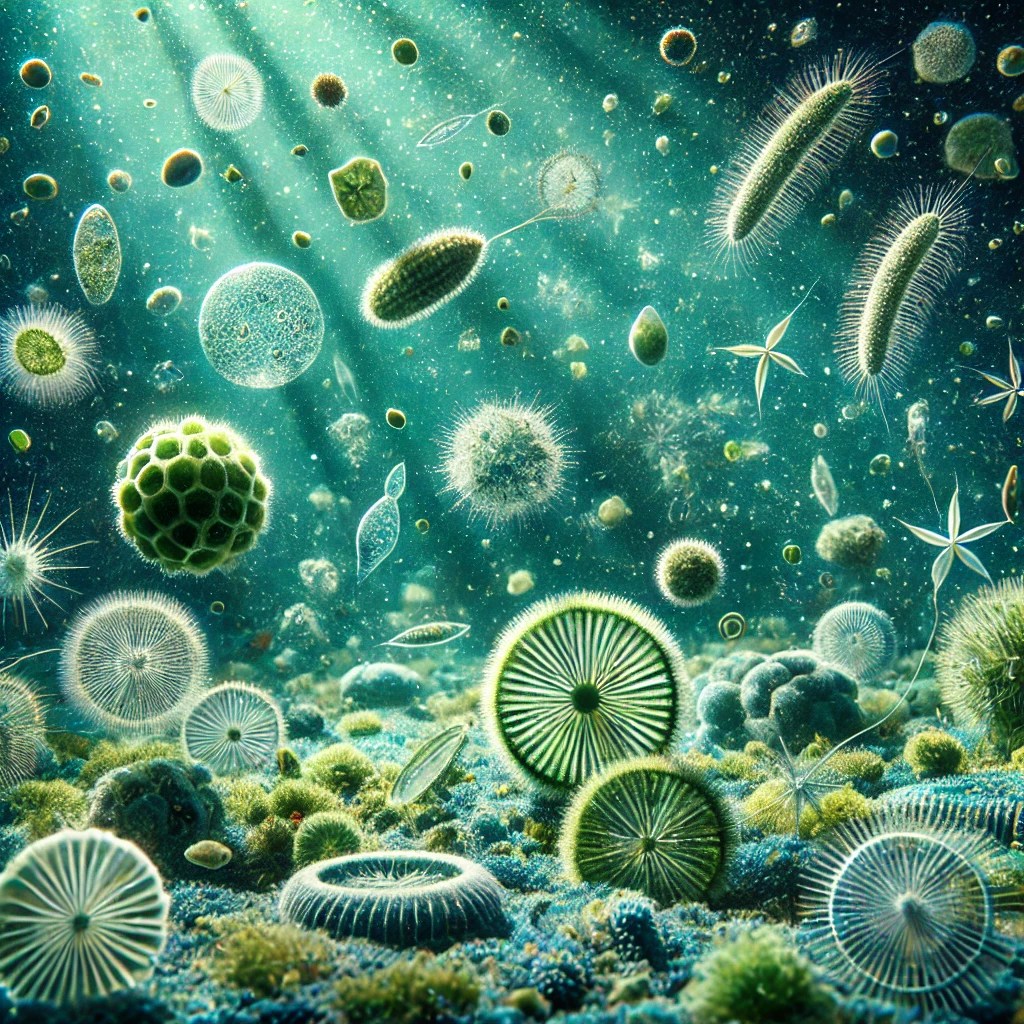
My PhD research on the Agulhas Current, which flows along South Africa’s coast, uncovered how effective these ocean microbes are, particularly in winter. This current is the fastest in the global ocean, a dynamic and nutrient-poor environment supporting a strong biological pump. Here, microbes absorb carbon and pump it down into the deep ocean, where it can be stored for centuries to millennia, helping regulate the climate over long periods of time. This small but essential process is a powerful example of how marine life can mitigate climate change naturally.
Why African Voices Matter in Ocean Science
Living and working in South Africa, I feel a deep responsibility to contribute to global climate solutions from an African perspective. Our coastlines, ocean currents, and marine ecosystems are unique and incredibly rich in biodiversity. Being involved in research close to home allows me to bring important local insights to the global stage. As African scientists, we understand the importance of sustaining our ecosystems not only for today but for future generations. Local research isn’t just a regional affair; it helps shape solutions that impact the whole planet.
Looking Forward: Championing African Ocean Science
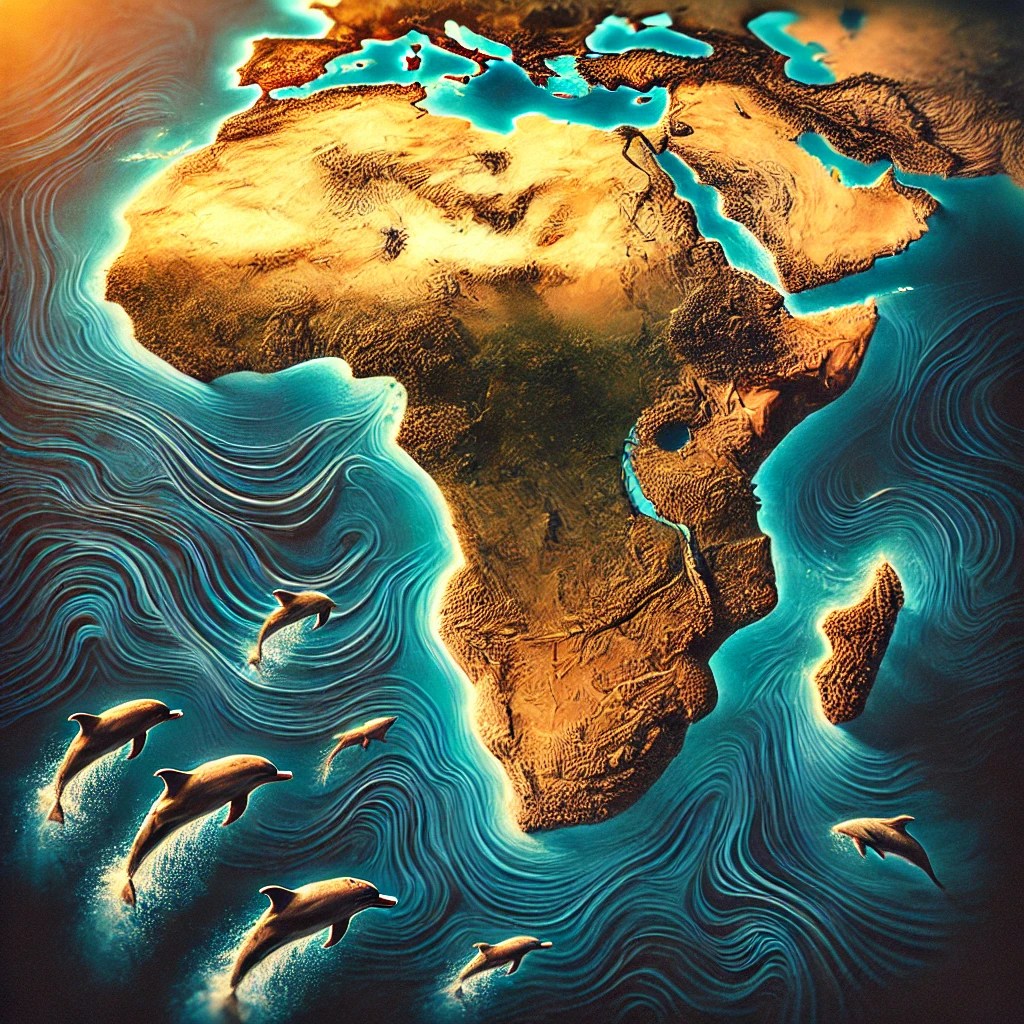
There’s so much more to discover about how ocean ecosystems regulate climate, and I’m thrilled to be part of this journey. I want more young African scientists to feel encouraged to pursue oceanography and other STEM fields. Our continent is home to many vital ecosystems, from the Agulhas Current to the Benguela Current, and we need homegrown expertise to understand and protect these resources.
Working in ocean science has shown me the tremendous power and resilience of nature—and how much we can learn from it. I hope my journey inspires others to dive into research, protect our oceans, and recognize that even the smallest organisms can have a monumental impact on our climate.
 Dr Kolisa Yola Sinyanya