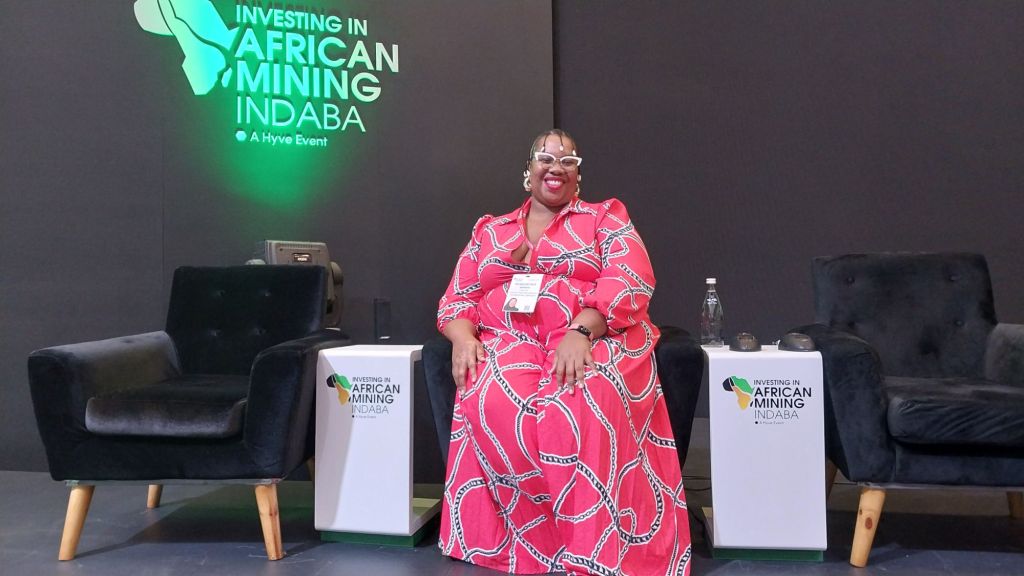
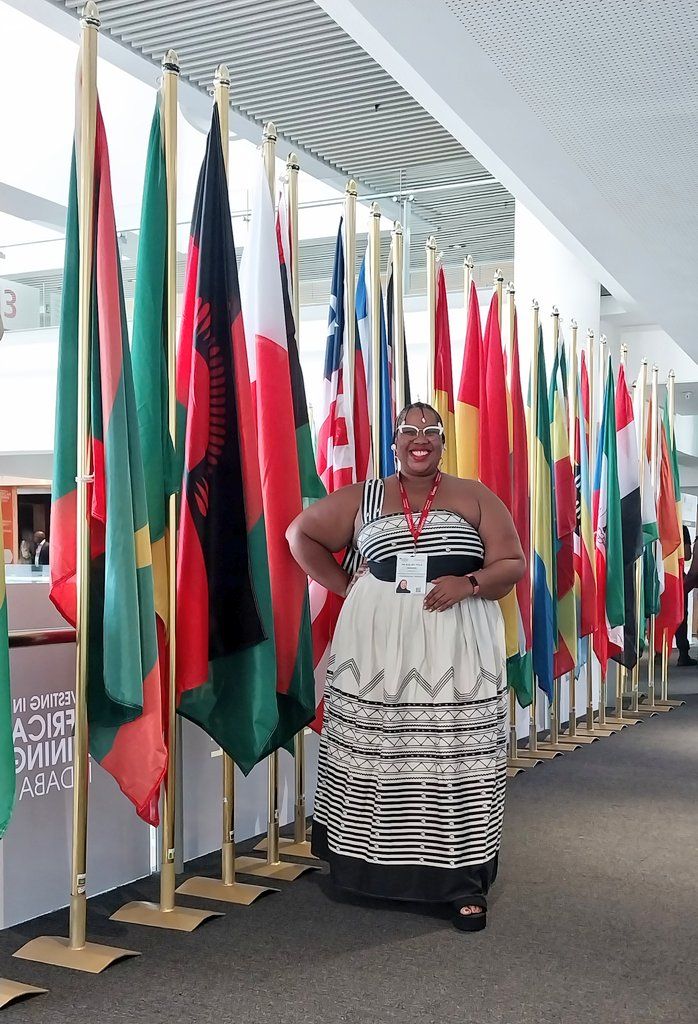
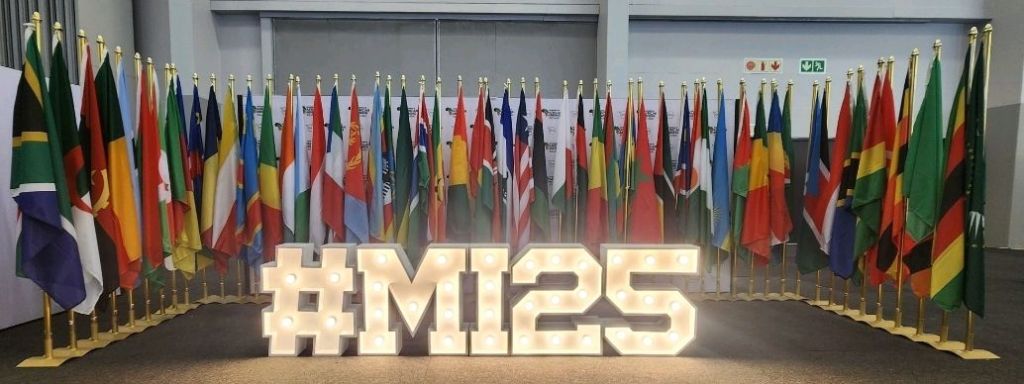
The Mining Indaba is one of Africa’s most significant gatherings for leaders, policymakers, and stakeholders in the mining sector. It serves as a platform where discussions shape the future of responsible mining, investment opportunities, and environmental sustainability. This year, I had the incredible honour of representing Ulwazi Scientific Communications and STEM Research at the 2025 Mining Indaba as its Founder and Director. This moment signals our growing influence bridging science, policy, and industry.
Science and Mining: Why Our Presence Matters
Ulwazi has established itself as a leader in scientific research support, storytelling, and consulting, particularly in the realms of ocean science and environmental sustainability. While mining has long been a terrestrial concern, there is a growing global interest in ocean mining, particularly in extracting deep-sea minerals needed for green technologies. Our presence at the Mining Indaba was essential in ensuring that the conversation around ocean sustainability, ethical resource extraction, and science-based policy is brought to the forefront.
At the Indaba, I engaged with government representatives, industry leaders, and researchers to emphasize the need for evidence-based decision-making in land-based and ocean mining practices. One of the key moments was my interaction with the South African Minister of Higher Education, Nobuhle Nkabane, where I highlighted the importance of research and postgraduate support in mining-related studies and other fields of study. This aligns with Ulwazi’s mission to empower researchers, enhance science communication, and drive policy engagement. Unfortunately, after exchanging personal contact details, the Minister has never responded to our efforts to follow up by sending direct messages to her personal number, as she requested.
Ocean Mining: A Critical Discussion
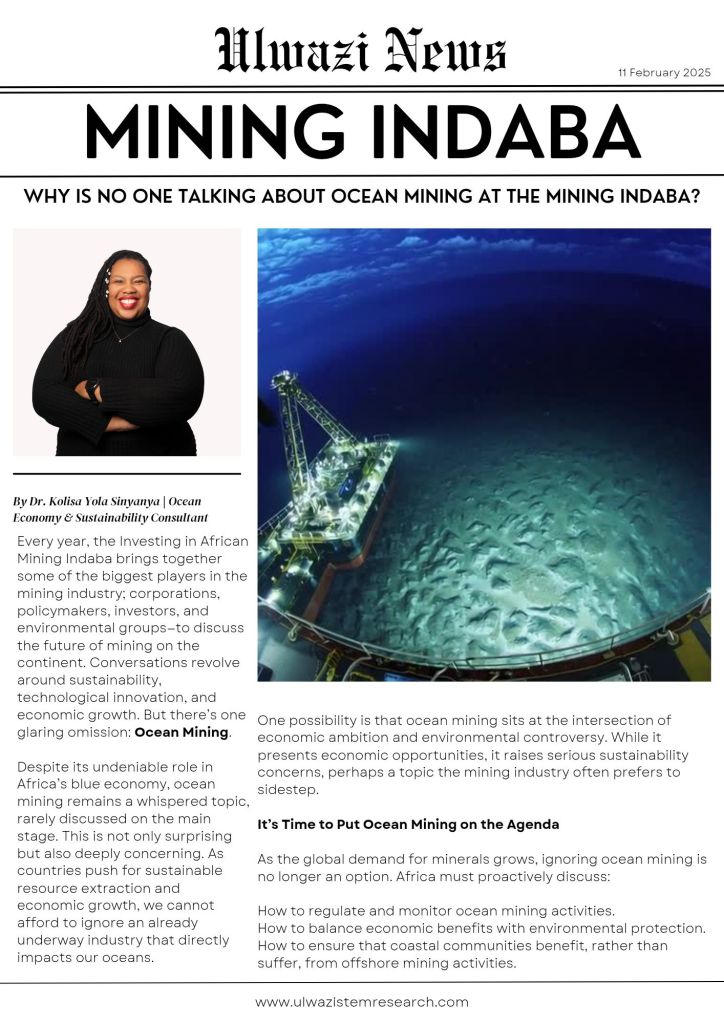
My participation at the Indaba was particularly timely given the piece I wrote for Ulwazi News on ocean mining. The article explored the increasing interest in deep-sea mineral extraction and its potential environmental consequences. While ocean mining is often touted as a solution to meet the demand for rare minerals used in renewable energy technologies, it poses significant risks to marine ecosystems.
In my article, I highlighted the lack of sufficient scientific data on deep-sea ecosystems and the potential for irreversible damage if commercial deep-sea mining is pursued without caution. The international community is still debating regulations for deep-sea extraction, and it is crucial that we push for science-driven policies that prioritise ocean health over profit.
Ulwazi’s Growing Impact
Being invited to the Mining Indaba represents a major milestone for Ulwazi Scientific Communications and STEM Research. It reaffirms our role in ensuring that African scientists, communicators, and policymakers are at the forefront of discussions that shape the future of resource extraction. We are committed to expanding our research consulting, grant writing, and policy engagement efforts to influence decision-making processes that affect both land and ocean resources.
Looking Ahead
As we move forward, Ulwazi will continue advocating for ethical, science-informed approaches to natural resource management. Our participation in high-level discussions like the Mining Indaba is just the beginning. We aim to strengthen collaborations, develop policy briefs, and support researchers in mining-related studies to ensure that Africa’s natural wealth is managed sustainably.
We are proud to be making an impact in these crucial conversations, and I look forward to seeing how Ulwazi continues to shape the intersection of science, policy, and industry. If you are interested in collaborating with us, supporting research efforts, or learning more about ocean mining, feel free to reach out.
 Dr Kolisa Yola Sinyanya