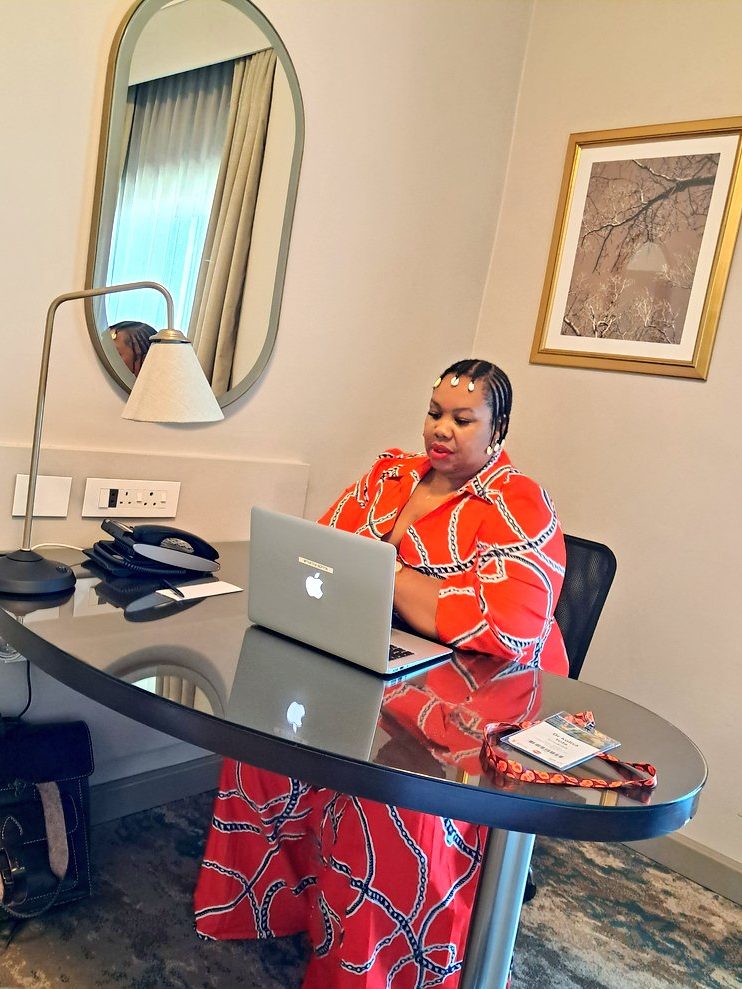
When I completed my PhD, I did something unexpected. I chose to become an entrepreneur.
And the backlash? LOUD!!!
From seasoned professors to freshly minted PhDs, there was confusion, disbelief, even disdain. “Why would you leave research?” they asked.
But here’s the thing: I wasn’t leaving anything. I was building something.
For me, the PhD wasn’t the final destination. It was a launchpad. It wasn’t just about lab coats and publications. It was about learning how to think critically, how to solve problems, how to communicate evidence, and how to lead. I wanted to apply all of that in a way that felt more expansive, more personal, and more impactful.
They Never Asked About MY Vision
The resistance I faced wasn’t really about research; it was about people struggling to accept a different path, one they hadn’t been taught to value. I experienced the same pushback during my PhD, when I prioritised science communication (Sci Comm) alongside my research. Some colleagues told me to “focus on the PhD,” because in their minds, “Sci Comm wasn’t real science.”
But you know that saying, “First they laugh at you, then they copy you”?
That’s precisely where we are now. Everyone’s doing Sci Comm, because we showed them its value. And let’s be honest, many finally realised there’s real money in it too. They never asked me what I was building. They didn’t want to understand the vision. They just hated that I dared to think beyond the box. But I did it anyway. And today, my company is growing.
Ulwazi Scientific Communications and STEM Research is the consulting company I founded to bridge the gap between science, policy, and society. We support researchers, institutions, and NGOs in communicating their work, securing funding, and designing impactful, evidence-based projects with a particular focus on ocean research.
Our work goes beyond consulting. We train and mentor emerging scholars, advocate for knowledge equity, and help build African-led research systems that make sense to us and for us.
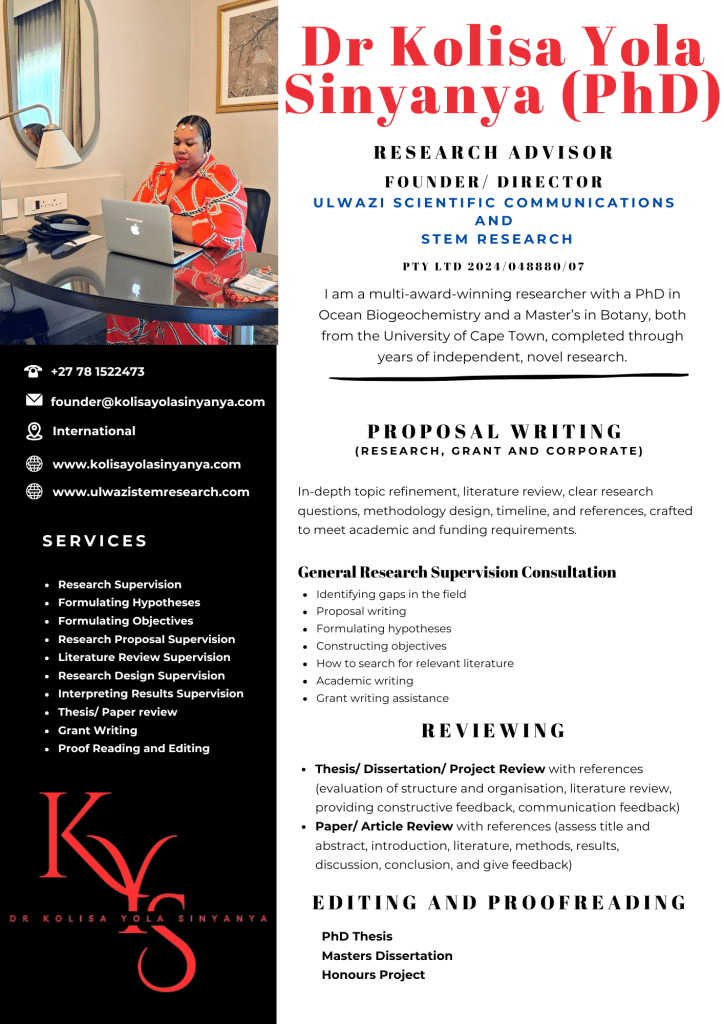
Ulwazi is still a young company, but we’re growing steadily and intentionally. We’ve built a business model that prioritises impact, flexibility, and freedom. I adopted a hybrid structure for our team, allowing us to work from anywhere in the world, including hotel rooms, while I travel for work.
The Postdoc That Made Me Laugh
At one international conference, I ran into a professor I knew well and had briefly worked with during my PhD. Her disapproval was immediate; she asked what I was doing now, and when I said I registered a business, her face dropped. You’d swear I’d told her I set my degree on fire.
Then came the offer: a postdoc, as if that was the “proper” way to use a PhD. To me, it was clear she was undermining what I was building. It felt like her way of saying, “You’re bluffing. You can’t actually do this.” I declined! Respectfully, but firmly. Because really, what level of undermining is that?
We’ve crossed paths since. And let’s just say… the salt remains strong.
But honestly? I’ve grown to appreciate those who laugh at or dismiss me. They’ve become a powerful part of my success story; they remind me exactly why I keep going.
If You’re Thinking of Starting Your Own Business
To those who are thinking of taking the leap into entrepreneurship, especially those coming from academia, this is what I’ve learned:
1. Start with what you have.
Your skills. Your network. Your story. You don’t need funding or permission to begin. Just start.
2. Clarity over aesthetics.
It’s not about the logo or the website at first. What do you offer? Who is it for? Why does it matter?
3. Ignore the noise.
Not everyone will understand your path, and that’s okay. You’re not building it for them.
When I first announced my new business venture on social media, I was subtweeted and talked about behind my back. People even sent me screenshots of the smear campaign. But on that very same day, I landed my first client who paid in full, no questions asked. That client has since given glowing feedback about how our services advanced her career. That was all the validation I needed: detractors will always be around, but they will never dim my light.
4. Be financially prepared.
Some months will test your patience, faith, and bank account. Plan ahead. Be smart. SAVE!
The Courage to Think Differently
You don’t need everyone’s approval to start a business. You need courage! And vision. And a willingness to bet on yourself even when others don’t.
So yes, I left the lab. But I didn’t leave my purpose.
I expanded it.
And that, to me, is what a PhD should prepare us for.
My name is Dr Kolisa Yola Sinyanya, a multi-award-winning ocean biogeochemist, science communicator, and founder of Ulwazi Scientific Communications and STEM Research, a global company bridging the gap between science, policy, and society. I’m deeply passionate about building African-led knowledge systems that are flexible, transformative, and truly reflective of African realities and ways of knowing.
 Dr Kolisa Yola Sinyanya