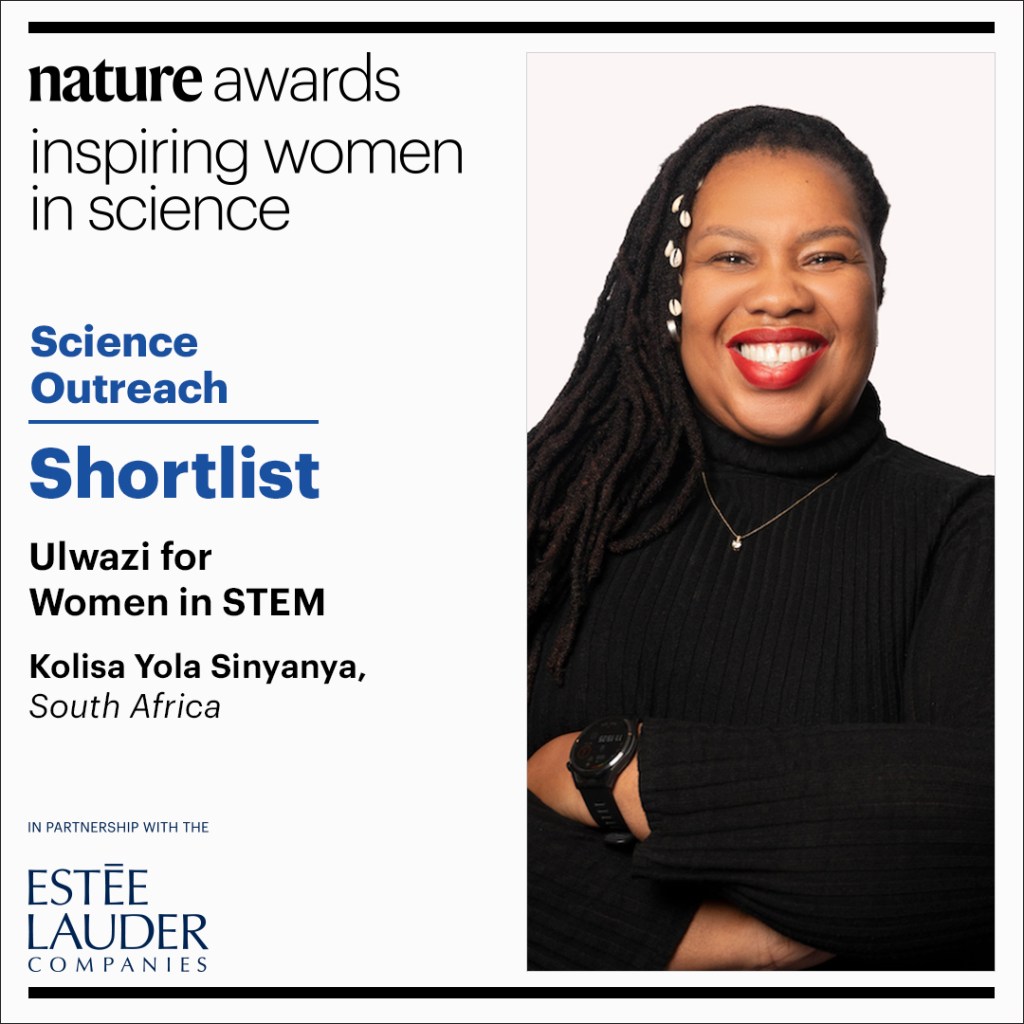
Being named a Top 5 finalist for the 2025 Springer Nature Inspiring Women in Science – Science Outreach Award is a moment I hold with deep gratitude and reflection. It is an honour that goes far beyond personal recognition. For me, it represents visibility for a kind of scientific work that often sits at the margins, work that bridges research, communication, policy, culture, and community.
My journey in science has never been confined to the laboratory alone. While my foundation is in ocean biogeochemistry, my work has always been shaped by a broader question: how does scientific knowledge move beyond journals and institutions to reach people, inform decisions, and shape more just futures? Science outreach and communication are not add-ons to research; they are essential to its impact. This recognition affirms that commitment. Working as an African scientist comes with its own realities. Too often, African knowledge is undervalued, extracted, or filtered through external narratives. To be recognised by Springer Nature while working from the continent, centring African contexts, and engaging directly with communities, researchers, and policymakers is deeply meaningful. It signals that global science spaces are slowly beginning to recognise that expertise does not only reside in the Global North, and that lived experience strengthens scientific insight.

This nomination also reflects the collective spaces I am part of. It belongs to the students and early-career researchers I support through research development and scientific writing, to the communities whose stories I help translate into evidence and policy language, and to the collaborators who believe that science must be accessible, ethical, and socially responsive. It also belongs to the mentors who guided me, and to the ancestors who remind me that knowledge is communal and carries responsibility. I especially want to acknowledge Professor Isabelle Ansorge and Dr Tiara Moore, who did not hesitate to support me in this journey.
Being shortlisted for the Springer Nature Inspiring Women in Science Award is not an endpoint. It is a reminder of the responsibility that comes with visibility. An obligation to continue opening doors for others, to challenge narrow definitions of scientific excellence, and to keep building bridges between science and society. Outreach is not about simplifying science; it is about respecting people enough to include them in it. I remain committed to doing rigorous, grounded, and relevant work. Work that centres African voices, supports emerging scholars, and treats science not as an elite exercise, but as a public good. This moment is one of affirmation, but more importantly, it is a call to continue building a legacy through service, integrity, and impact.
 Dr Kolisa Yola Sinyanya