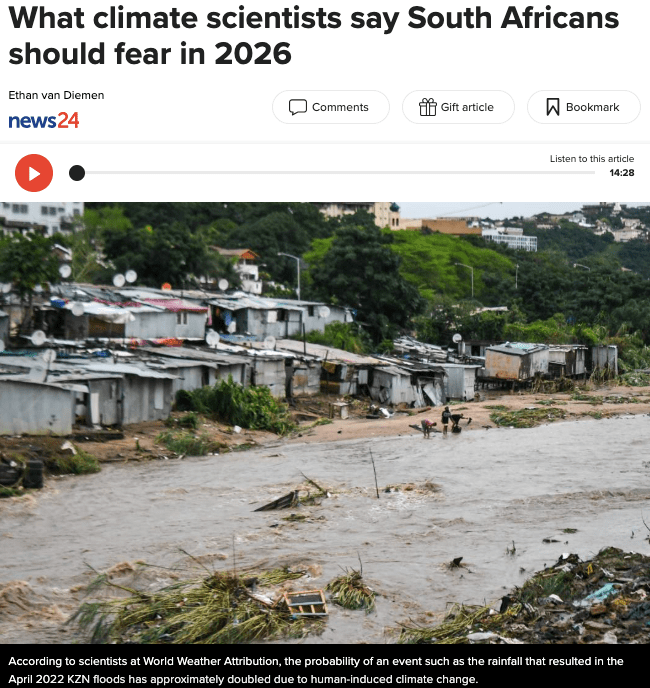
Recently, I was invited to contribute to a national climate feature published by News24, exploring what South Africans should be paying attention to as we move into 2026. The article brought together perspectives from climate scientists across disciplines, and my contribution focused on something that often goes unnoticed the ocean, and the microscopic life within it.
When people think about climate change, they usually picture heatwaves, floods, droughts, or melting ice caps. Fewer people think about the ocean, and even fewer think about phytoplankton tiny marine plants that drift through the sea. Yet these organisms quietly regulate our climate, support fisheries, and absorb vast amounts of carbon dioxide from the atmosphere. They are, quite literally, the foundation of ocean life.
What the Ocean Revealed in 2025
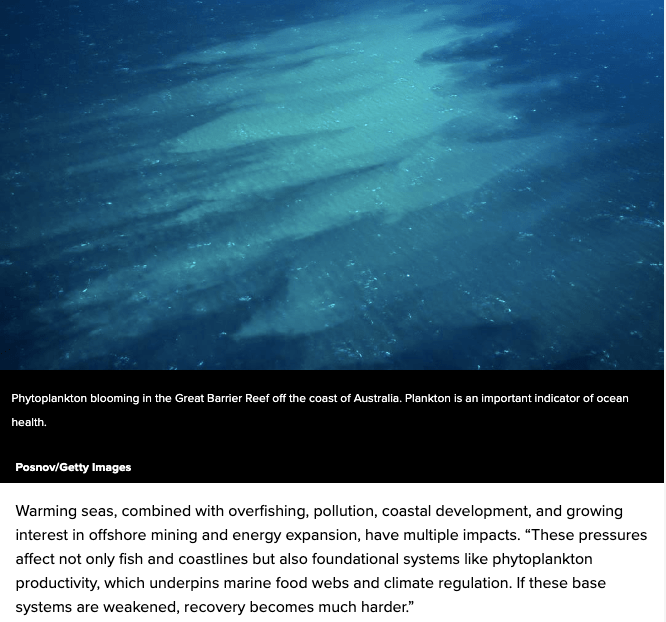
In South Africa’s surrounding waters, climate change in 2025 was evident in unusually warm ocean temperatures, shifting marine ecosystems, and more frequent extreme coastal events. But beneath the surface, changes were also happening at a microscopic level. Warmer waters and altered currents affected where phytoplankton grow and how productive they are.
This matters because when phytoplankton are disrupted, the effects ripple through the entire marine food web, from zooplankton and fish populations to the people and economies that depend on them. These changes may be invisible to the naked eye, but they are powerful indicators of stress in the ocean system.
Why This Matters Beyond the Coast
A common question I’m asked is: Why should inland South Africans care about the ocean?
The answer is simple: the ocean helps regulate our weather, rainfall, temperature, and overall climate. What happens at sea influences droughts, floods, and heat extremes far inland.
Phytoplankton play a role here, too. By absorbing carbon dioxide and producing oxygen, these microscopic organisms help stabilise the climate system. When ocean conditions change in ways that affect phytoplankton, those changes can influence climate stability well beyond the coast. Impacts on marine ecosystems also filter inland through food prices, employment, and economic resilience.
The Missing Piece: Early Warning and Action
What is often missing from climate conversations is the idea of early warning and resilience. The ocean sends us signals through changes in temperature, currents, and plankton long before significant impacts are felt on land. South Africa has a strong scientific capacity to detect these changes. The real challenge is not whether we can measure them, but whether we act on the science early enough. The choices we make now will determine whether the ocean continues to buffer us against climate extremes or whether it becomes another source of risk.
Being part of this national conversation is a reminder that climate change is not only about future projections, but it is also already unfolding, quietly and visibly, from the smallest plankton to the most significant storms. The ocean is speaking. The question is whether we are ready to listen and to act.
 Dr Kolisa Yola Sinyanya