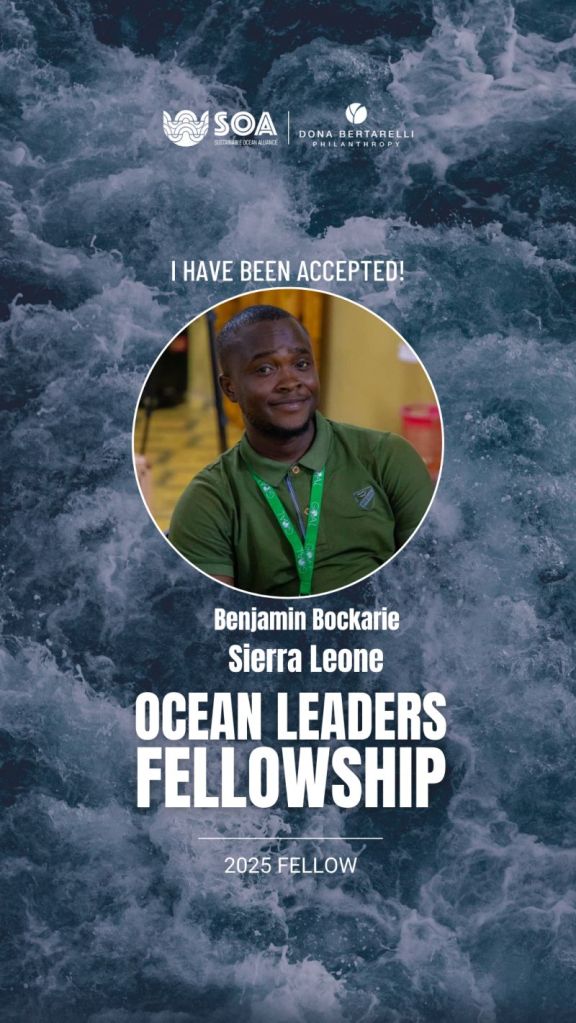
Last year, I had the privilege of serving as a mentor through the Sustainable Ocean Alliance Ocean Leaders Fellowship, where I was matched with an inspiring ocean changemaker, Benjamin Bockarie. Benjamin is originally from Sierra Leone and is currently based in Ireland, pursuing an MSc in Applied Coastal and Marine Management at the University College Cork as an awardee of the prestigious Ireland Africa Fellowship 2025-2026. He leads a non-profit organisation, BenAquas, working in aquaculture, with a strong focus on blue industrialisation and the broader blue economy. From the very beginning, it was clear that his work was impactful. What he needed was not more passion or technical knowledge, but visibility, positioning, and narrative clarity.
About the Sustainable Ocean Alliance
The Sustainable Ocean Alliance (SOA) is a global ocean focused nonprofit organisation dedicated to identifying, supporting, and connecting emerging leaders who are advancing sustainable ocean use and protection. Founded in 2016 in the United States, SOA’s mission is to build a more inclusive, equitable, and effective ocean leadership ecosystem by empowering early to mid career changemakers from diverse regions and sectors.
Through flagship initiatives such as the Ocean Leaders Fellowship, SOA brings together professionals working across science, policy, industry, and innovation, including aquaculture, blue economy development, marine conservation, coastal communities, and more. It provides mentorship, training, and networks that help accelerate their impact locally and globally.
Shared Reflections on the Mentorship Journey
Mentorship is not just a process; it is a lived experience that shapes confidence, clarity, and a sense of leadership identity. To capture that transformation, we each share our perspectives on the journey and its impact.
Mentor Perspective: From Doing the Work to Telling the Story
Many ocean and climate leaders are doing powerful, community-based work, yet struggle with one critical piece: how to communicate their impact effectively.
Our sessions focused on:
- Thinking internationally
- Strengthening the public image of his organisation
- Clarifying his personal brand as a blue economy leader
- Using science communication as a strategic leadership tool
- Positioning his aquaculture work within larger conversations about food security, livelihoods, and sustainable ocean economies
We worked on translating technical and grassroots work into messages that funders, partners, policymakers, and global audiences could understand and connect with. Beyond communication, our sessions encouraged him to think internationally to see how his local aquaculture work fits within global blue economy systems, food security conversations, and sustainable development priorities. We also strengthened his branding, from his company logo to how he presents himself across both professional and informal platforms. Because impact alone is not enough, impact must also be visible, understood, and positioned within the right global context.
Mentee Perspective: My Work Before the Mentorship
BenAquas works at the intersection of sustainable aquaculture, blue food systems, and community development. We support communities and industries through responsible aquaculture innovation, coastal and marine consultancy, and applied research that strengthens food security, livelihoods, and ecosystem resilience. Our approach blends science, data analytics, and local knowledge to deliver practical, impact-driven solutions.
Before the mentorship, we largely viewed our work as locally and nationally grounded, with growing but still informal links to the wider global blue economy. While our work aligned strongly with global priorities such as climate resilience, biodiversity conservation, and sustainable food systems, we had not fully positioned BenAquas as an active node within global blue economy networks and knowledge systems.
At that time, one of our main challenges was clearly communicating our impact, value proposition, and leadership potential, especially to international audiences and decision-makers. We described ourselves as an emerging, innovation-driven organisation with strong technical capacity, but we did not yet fully see ourselves as a global blue economy leader, largely due to limited visibility, networks, and strategic storytelling rather than a lack of expertise or ambition.
Mentor Perspective: Science Communication as a Leadership Tool
Science communication is often mistaken for simply “simplifying science.” In reality, it is about strategic storytelling for influence and change. For emerging leaders in the blue economy, this means linking local aquaculture initiatives to global food systems, framing community projects as part of blue industrial development, and communicating not only activities but also outcomes, vision, and long-term leadership in an international context. Over time, I saw Benjamin refine how he introduced himself, described his organisation’s mission, and positioned his work within global conversations on the ocean, food security, and development. He began to move from project implementer to sector leader, with a clear, confident, and internationally aware voice.
Mentee Perspective: What Changed for Me
During the mentorship, as a company, we learned that effective science communication is less about technical depth and more about clarity, relevance, and audience awareness. We became more intentional about simplifying complex ideas, focusing on outcomes rather than processes, and clearly linking evidence to real-world decisions. This helped us better understand how our work fits within broader global blue economy priorities such as sustainable food systems, climate resilience, and data-informed ocean governance.
As a result, our confidence and messaging became more focused and consistent, without overstating impact. We now communicate more easily in meetings, events, and online spaces, adapting our language to different audiences while staying grounded in evidence. The mentorship also shifted how we view international engagement, seeing partnerships not as aspirational add-ons, but as practical opportunities for shared learning, collaboration, and scaling impact within the global blue economy.
Mentor Perspective: Growth We Could See- Even in Limited Time
One reality of global mentorship programmes is the time constraint. We didn’t have nearly enough of it. There were still so many areas we wanted to explore, partnerships, funding narratives, global advocacy strategy, and long-term international positioning. But even within our limited sessions, the growth was undeniable.
I observed greater confidence in how he spoke about his work, clearer, more compelling messaging about his organisation’s role in aquaculture and the blue economy, and a stronger alignment between his local impact and global conversations on ocean, food security, and development. There was also a visible shift in how he positioned himself not just as a project implementer, but as an international blue economy leader. Beyond messaging, his organisation’s visual identity evolved as well. We refined the company name to make it more marketable and aligned the logo and overall brand image with industry standards and consumer appeal. The transformation wasn’t just professional; it was leadership-level growth, the kind that changes how someone sees themselves and their place in the global ocean space.
Mentee Perspective: What This Mentorship Meant to Me
Having a mentor provided space for reflection, guidance, and honest challenge. It was valuable to have someone outside the organisation who could listen carefully, ask the right questions, and help clarify both personal goals and organisational direction without imposing solutions.
The sessions were most valuable for the structured thinking they encouraged, particularly around leadership, communication, and strategic focus. Through this process, leadership became less about doing everything personally and more about setting direction, building confidence, and creating room for collaboration. As a result, there is now greater confidence in engaging in international ocean and development spaces, grounded in preparation and clarity rather than visibility alone.
Overall, the mentorship has influenced a more intentional and realistic vision for the organisation’s future one that values partnerships, evidence-based impact, and steady growth. It reinforced the importance of positioning BenAquas as a credible, learning-oriented contributor to the blue economy, while remaining rooted in community impact and practical solutions.
Why This Mentorship Matters
Mentorship in the ocean sector is not just about guidance. It is about unlocking voice, visibility, and influence for leaders who are already doing powerful work on the ground and helping them see how their work fits within global systems and conversations. Ben represents a new generation of African blue economy leaders rooted in community impact but increasingly visible on the global stage. Supporting leaders like him is part of building a more inclusive, representative, and effective future for the ocean. For me, this mentorship was a powerful reminder that sometimes the most transformative support we can offer is helping someone realise: Your work is powerful. Now let the world see it and understand its place in the global ocean economy.
Continuing the Journey: Core Mentor Invitation for 2026
Following this mentorship experience, I was invited to return as a Core Mentor for the 2026 Ocean Leaders Fellowship with the Sustainable Ocean Alliance. This invitation is deeply meaningful to me. It reflects not only the impact of my work with Benjamin, but also the growing recognition of the importance of mentorship that goes beyond technical guidance. Today’s emerging ocean leaders need support in strategic positioning, science communication, global engagement, and leadership identity, especially those working at the intersection of community impact and the blue economy.
Serving again as a Core Mentor allows me to continue supporting the next wave of ocean changemakers as they step confidently onto the international stage. It is part of my broader commitment to strengthening African and Global South leadership in ocean science, blue industrialisation, and sustainable development. Because mentorship, when done intentionally, does more than build skills, it helps leaders see the scale of their own potential.
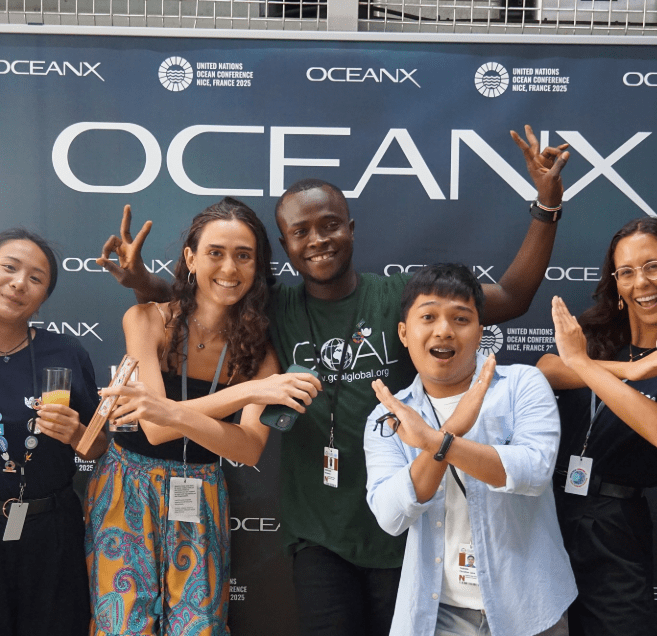
Image from SOA Instagram page
 Dr Kolisa Yola Sinyanya