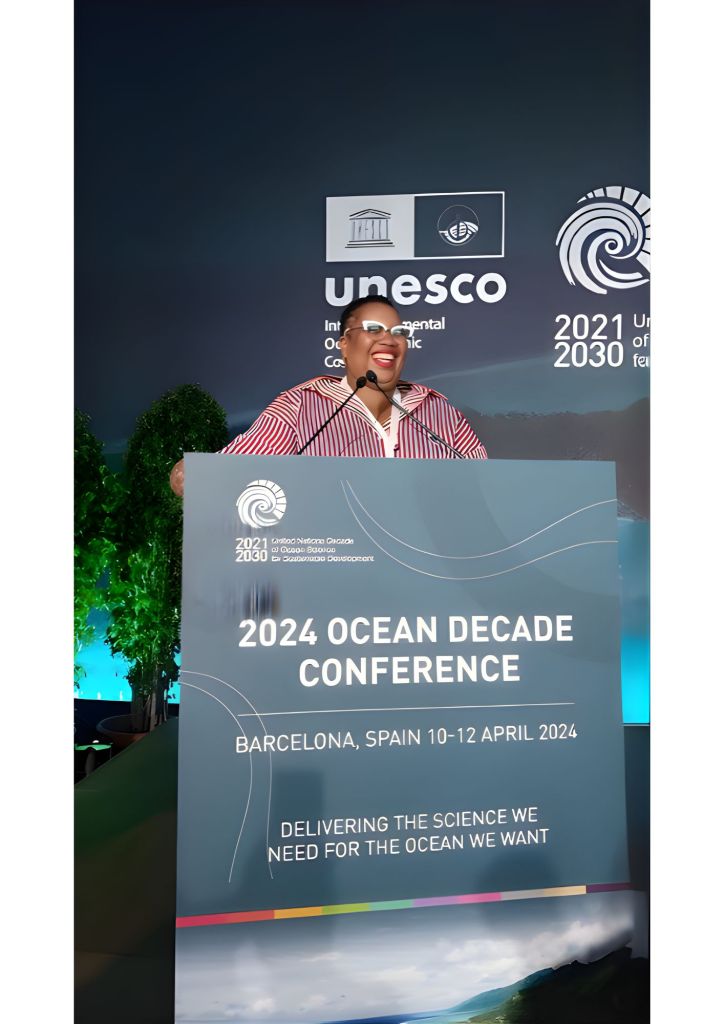
My work has always sat at the intersection of ocean science, governance, and economic transformation. Through my company, Ulwazi Scientific Communications and STEM Research (Pty) Ltd, I apply ocean knowledge within the broader blue economy with a specific focus on research education, skills development, and science communication. Over the past few years, I’ve increasingly used the term blue industrialisation to describe the structural transformation required in Africa’s ocean sectors.
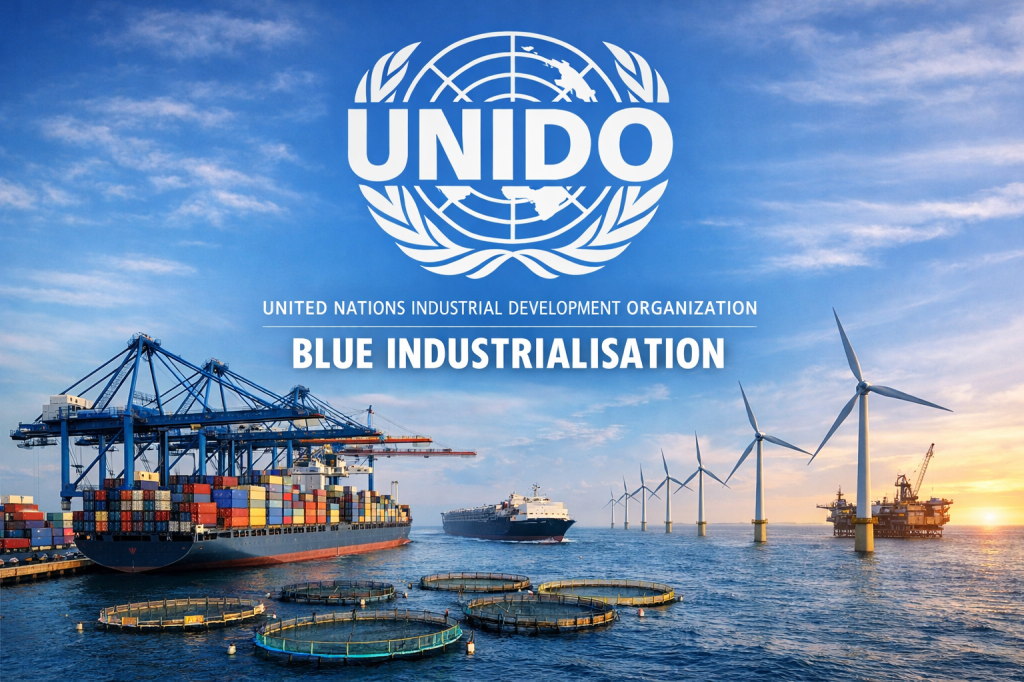
The term itself is not mine. It has been referenced in development discourse, including by the United Nations Industrial Development Organization (UNIDO), to describe sustainable, water-related economic activities that strengthen value chains, enhance livelihoods, and safeguard marine environments. In practical terms, blue industrialisation promotes the use of ocean resources, aquaculture, renewable energy, maritime transport, and offshore industries not merely for extraction, but for long-term economic upgrading while preserving ecosystem health. In my own work, the phrase became useful because it captured something that “blue economy” alone did not. It reflects intentional industrial upgrading, productive capacity development, and skills alignment, not merely participation in ocean sectors.
Recently, while working on a new academic paper examining maritime education and governance readiness in the African context, I searched the term “blue industrialisation” to deepen my literature base. What struck me was how little peer-reviewed work explicitly engages with the concept in a structured manner, particularly with respect to skills development, governance systems, and human capital architecture. The literature on the blue economy is vast. The literature on industrialisation in Africa is equally substantial. However, the intersection of the deliberate industrial transformation of ocean sectors through governance-ready human capital remains relatively underdeveloped.
That gap is significant
Africa’s ocean future, particularly under frameworks such as Agenda 2063 and the African Continental Free Trade Area (AfCFTA), will not be shaped solely by resource use. It will be shaped by who has the skills to participate, regulate, innovate, communicate, and govern. Through Ulwazi’s research support programmes, scientific writing workshops, and science communication training initiatives, I see firsthand how interdisciplinary skills, research literacy, policy awareness, digital competence, and structured communication shape whether blue industrialisation is inclusive or extractive. If the academic literature is still thin in this space, that signals opportunity. Not for ownership of terminology but for deeper exploration and scholarship.
Blue industrialisation, at least in the way I engage with it, is not simply about ocean growth. It is about transforming ocean sectors into engines of sustainable, value-added, governance-aligned development.
And that conversation is only just beginning.
— Dr Kolisa Yola Sinyanya
 Dr Kolisa Yola Sinyanya